22/10/2026 08:14
First Visit or Returning Buyer? YouTube Channel Trailers for Cambodian Window-Screen Shops

A customer arrives at your YouTube channel after seeing a removable window screen in a shared video. They want to know whether your shop supplies complete frames, replaces damaged mesh, or offers both. If the first video assumes they already understand your products, they may leave with the wrong impression. A useful channel introduction can answer that basic question before a detailed demonstration begins. This guide uses a hypothetical Cambodian window-screen shop to explain how to choose an introduction, select a different video for returning subscribers, and review the resulting journey before spending time or money on promotion.
Start with the visitor’s unanswered question
In this hypothetical example, a Phnom Penh shop makes removable insect screens and replaces mesh in compatible frames. Its channel contains workshop footage, cleaning demonstrations and product comparisons. The owner’s first task is to write one sentence describing what a newcomer should understand: this shop handles these particular screen types, and suitability depends on the customer’s existing window. That sentence becomes the selection rule for the introduction.
Review candidate videos against that rule. A beautifully filmed mesh close-up may show workmanship while leaving the product unclear. A workshop tour may establish context but never explain what customers can request. Choose footage that identifies the complete object, shows its relationship to the window and explains the next useful action. The introduction should help someone decide whether to continue exploring, without requiring them to understand workshop vocabulary.
Give the trailer and featured video different jobs
YouTube’s official layout guide distinguishes a channel trailer for people who have not subscribed from a featured video for returning subscribers. Both belong to the channel Home tab. Once someone watches the relevant trailer or featured video, YouTube says it will no longer show that video to them in that placement. Essential buying information therefore should not depend entirely on either spotlight.
For the hypothetical shop, the trailer introduces the product range and enquiry process. The returning-subscriber choice could explain how to clean a particular removable frame or introduce a newly supported frame style. Subscription status is not proof of purchase: a returning subscriber might still be comparing options. Make the second video understandable on its own, with the demonstrated product clearly identified and any limits stated.
Select footage using a practical decision process
Watch each candidate without reading its title first. Can you identify the product from the opening scene? Does the demonstration match work the shop currently accepts? Is the explanation understandable to the intended Cambodian audience? Does the ending lead to a sensible next step? If the answer to a basic question is no, revise the video before placing it at the channel entrance.
Prefer a stable introduction when the shop’s core offer changes infrequently. Avoid building it around a temporary discount, an uncertain delivery promise or a sample that is no longer available. A current product update can serve a narrower role elsewhere. If no existing video explains the business clearly, film a modest introduction with a real sample. Reusing the most popular upload simply because its counter is larger does not establish that it answers a newcomer’s question.
Film a complete object, one detail and a next step
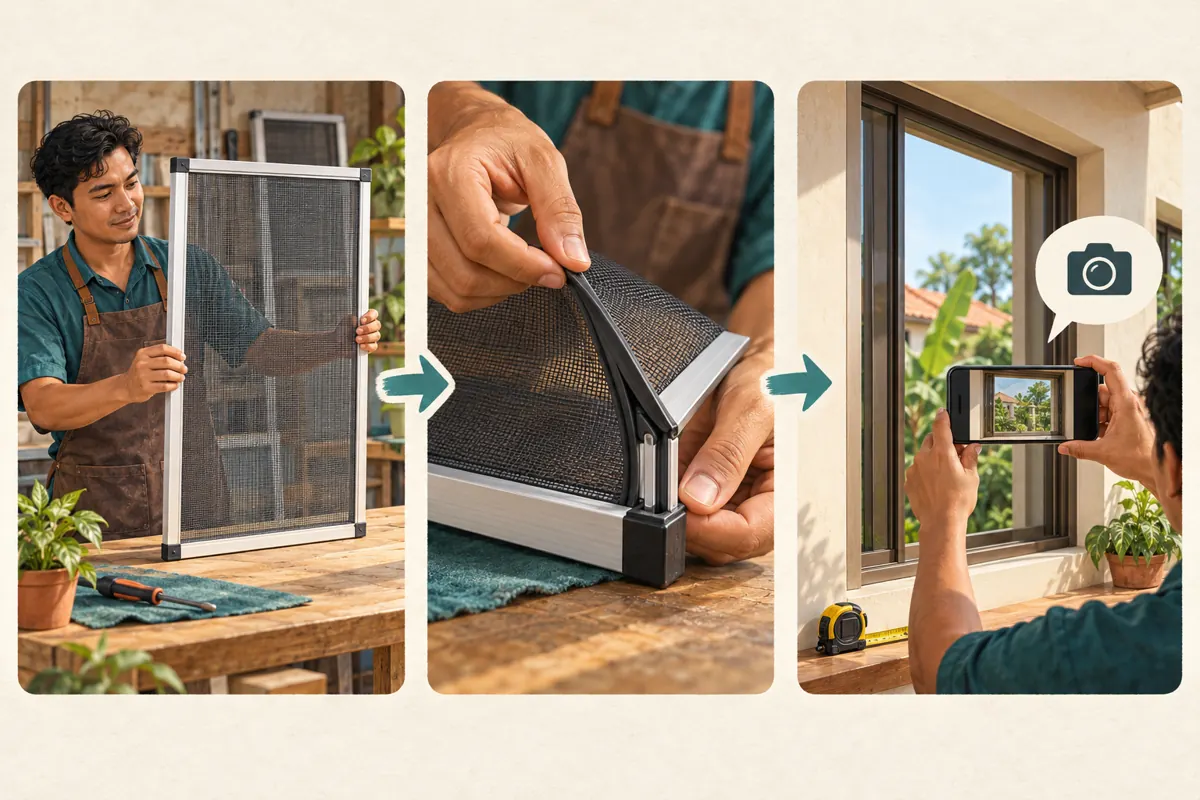
A practical filming sequence begins with the complete screen beside a suitable demonstration window. Identify whether the sample is a whole framed unit or a mesh replacement. Next, move closer to one relevant detail, such as the frame edge or removable fitting. Finish by explaining what information helps the shop assess an enquiry. This sequence gives the viewer context before asking them to interpret a close-up.
For a hypothetical script, the owner might say: “We make removable screens and assess mesh replacement for suitable frames. This sample shows one frame style. Send a clear photograph of your window and explain whether you need a new frame or replacement mesh.” Adapt those words to the shop’s actual work. Do not imply that one demonstration proves compatibility with every window, and do not present a preliminary photo review as a confirmed quotation.

Make the Cambodian customer context concrete
Choose the spoken language according to the customers the video is intended to help. For a Khmer-speaking audience, ask a fluent reviewer to check that the distinction between frame, mesh and complete unit survives the explanation. Where a technical term is unfamiliar, point to the component while naming it. Product recognition matters more than filling the introduction with specialist terminology or switching languages to sound impressive.
State only the service area and fulfilment options the business actually supports. A workshop in Phnom Penh should not imply nationwide installation merely because it can discuss enquiries online. Separate collection, delivery and installation if their arrangements differ. When filming a customer’s window, remove identifying details unless permission covers their inclusion. A clean demonstration opening at the workshop often explains the product without exposing someone’s home or suggesting an endorsement.
Set up the chosen videos in YouTube Studio
On desktop, YouTube’s documented route is Studio, Customization, then Home tab. Enable that tab if needed. Under Layout, use ADD section and Channel trailer to select the introduction, then Publish. For returning subscribers, use ADD section and Spotlight, choose the featured video, and Publish. The same official guide explains how to add and reorder supporting sections.
Before making those changes, prepare a short selection note containing each video’s title, public URL and intended role. This prevents a similarly named workshop upload from being selected accidentally. Afterward, check the public result rather than treating the saved selection as sufficient evidence. Keep a note of the previous choices so another authorised team member can understand what changed and why. A small shop can manage this with a simple shared document.
Give essential information a lasting place
Use the introduction to orient viewers, then make the fuller explanations easy to locate. For this hypothetical shop, useful supporting material includes a complete-frame overview, a mesh-replacement explanation and a care demonstration. The channel should still make sense when the introductory video is absent from a particular visitor’s view. Choose plain titles that identify the actual task instead of relying on vague phrases such as “Our best solution.”
Check the destination promised at the end of the trailer. If the speaker tells viewers to find the measuring guide, make sure that guide exists, covers the same product and remains easy to recognise. If the next step is an enquiry, explain what to send through the shop’s established contact route. Do not ask people to post home addresses or other private information in public comments. Keep the requested information proportionate to the initial assessment.
Test the journey with people who lack workshop context
Ask an authorised colleague who did not edit the video to review the public channel on a phone. Give them a concrete task: find out whether the shop replaces mesh in an existing frame. Let them navigate without coaching, then ask what they believe the shop offers and what they would do next. Record their interpretation before explaining what you intended. A misunderstanding is a useful editing signal.
Also review the experience with a willing subscribed colleague, noting whether they previously watched the featured video. Their screen may differ from yours, so record the viewing context alongside any apparent issue. Test the video itself with sound and with sound muted. Check that the whole frame remains recognisable, important details are visible and the next step is understandable. These observations evaluate clarity; they do not establish future reach or sales.
Apply a policy check before considering an SMM service
The supplied catalogue includes the exact title “YouTube - Auto Comments ~ Emoji ~ Max 1M ~ 1k-3k/days ~ INSTANT.” Its description is empty. The title indicates an emoji-comment offering, but it does not document the method, audience location or compliance with YouTube rules. Those missing facts matter more than the promotional wording. An emoji cannot tell this shop whether a viewer needs a frame, replacement mesh or fitting advice.
YouTube’s fake engagement policy prohibits artificial increases in views, likes, comments and other metrics. It also warns that a hired promoter’s actions can affect the channel. Do not order artificial engagement to make the introduction appear trusted. Purchased engagement is not evidence of genuine interest, sales, advertising delivery or Cambodian users. If a provider cannot explain a compliant promotional method, leave the request unplaced and focus on useful content distribution instead.
Promote the destination that matches the question
A channel link is useful when someone needs to understand the shop’s overall offer. A direct demonstration link is more helpful when someone already asks a precise question, such as how a removable screen is cleaned. Match the shared destination to that situation. For example, the hypothetical shop could share its introduction in its own general business update while sending the care demonstration to a customer who requested it.
Keep the accompanying message specific. Explain what the viewer will learn, without promising that watching guarantees a suitable product or a faster quotation. Avoid posting the same link repeatedly in unrelated discussions. When discussing paid promotion, establish the actual method and destination before approving a budget; do not equate an SMM catalogue entry with an official advertising placement. A clear channel entrance helps visitors orient themselves, but distribution still requires its own appropriate plan.
Review misunderstandings and maintain the introduction
After genuine enquiries arrive, record recurring points of confusion in a small editorial log. Useful categories might include complete frame versus mesh only, collection versus installation, and preliminary assessment versus confirmed order. Keep personal customer details out of the log. If several conversations reveal the same misunderstanding, inspect the relevant sentence or shot and decide whether the introduction needs a clearer explanation.
Common mistakes include featuring an expired offer, selecting a technical close-up without context, hiding essential terms only in speech and treating a changed engagement counter as proof of success. Assign someone to revisit the chosen videos when products, service areas or enquiry arrangements change. Review before the next planned promotion as well. Keep a dated note of the reason for each replacement so the channel’s welcome remains consistent with the work the shop can actually accept.

Frequently asked questions
Must a small shop film a new video specifically for the trailer?
No. An existing video can work if it introduces the current offer, makes sense without prior knowledge and gives viewers an appropriate next step. Watch it from beginning to end before selecting it. A strong demonstration may still need a clearer opening if it starts halfway through a repair or assumes the viewer already knows which screen type is being shown.
Should the trailer include prices?
Include prices only when they are accurate, adequately qualified and practical to maintain. For made-to-measure screens, a single figure can create confusion about dimensions, materials or installation. It may be more useful to explain what information is needed for a quotation. If a price is included, define what it covers and review the video whenever that offer changes.
Does a clearer channel introduction mean promotion will produce orders?
No. It can help people understand the offer, but demand also depends on suitability, availability, location and the customer’s circumstances. Review actual enquiry quality and confirmed business outcomes separately from viewing figures. A customer who accurately understands that the shop cannot handle their frame type may leave without ordering; the introduction still helped prevent a misleading expectation.
What should the shop do if an agency recommends buying comments first?
Ask for the proposed method and assess it against YouTube’s fake engagement policy before proceeding. Do not accept a claim that purchased comments establish trust or Cambodian demand. Give the agency a content brief focused on understandable demonstrations and appropriate distribution, and decline activity intended to manufacture engagement. Keep the agreed scope in writing so everyone understands the work being commissioned.
Explore the current service catalogue, create an account, or ask a specific question through support tickets.
Prepared with AI assistance. Illustrations explain the workflow and do not represent customer results.