19/10/2026 16:34
Who Paid for the Demo? A YouTube Sponsorship Workflow for Cambodian Appliance Shops
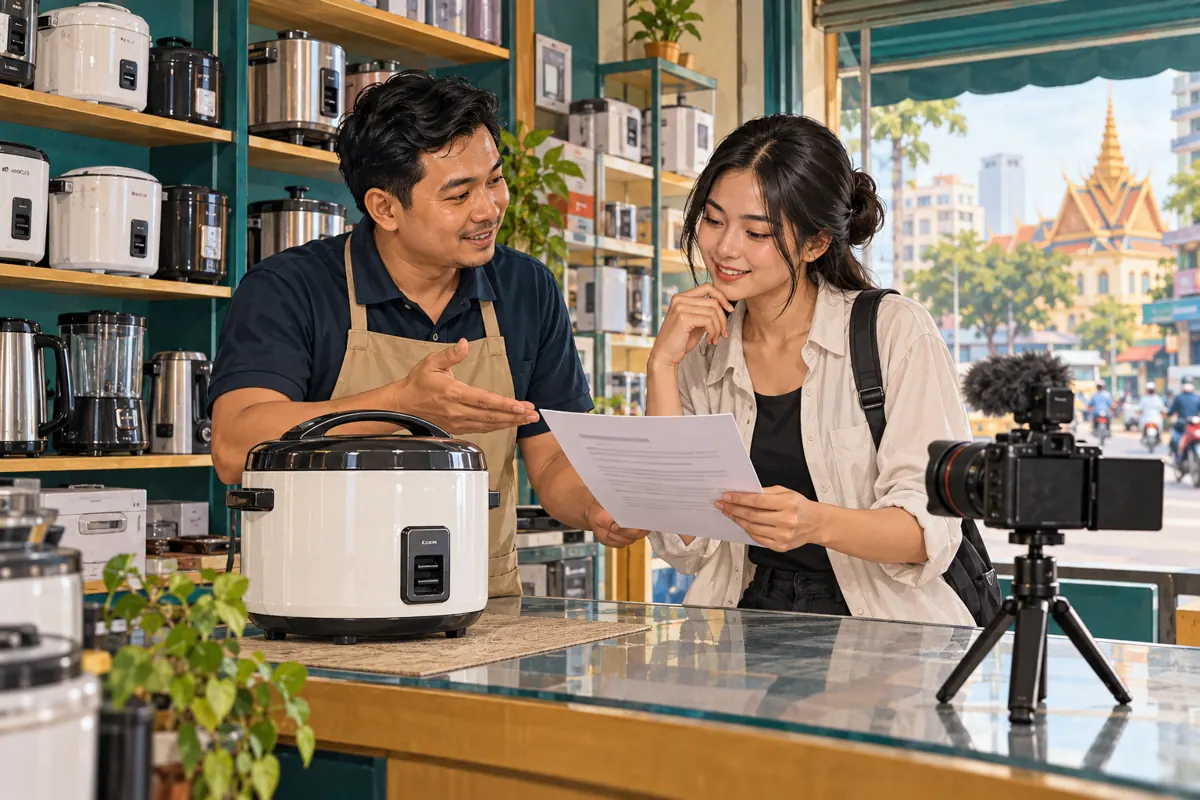
A useful product demonstration should help shoppers understand both the appliance and the circumstances behind the recommendation. When a Cambodian shop pays a creator, provides a free product, or arranges a demonstration, viewers need enough context to judge what they are watching. A friendly presentation alone does not explain who supplied the item or influenced the script. This article follows a hypothetical Phnom Penh appliance shop preparing a sponsored rice cooker demonstration with an independent creator. The practical goal is to make the relationship understandable before promoting the finished video. The workflow covers the agreement, spoken explanation, YouTube disclosure setting, review process, and customer follow-up. It also explains why buying engagement through an SMM panel cannot substitute for a transparent partnership or demonstrate that Cambodian shoppers want the product. Every shop, creator, and arrangement described in the examples is hypothetical.
1. Identify what the creator actually receives
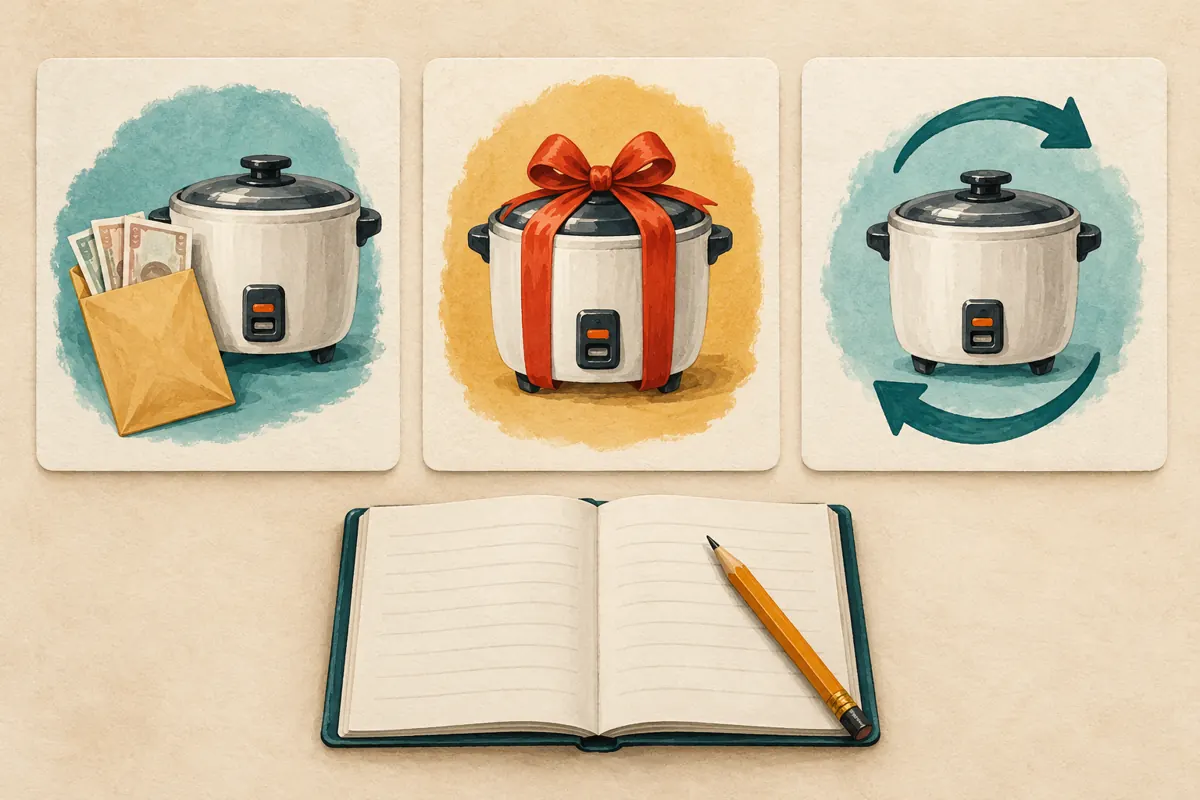
Start with the arrangement, before discussing the video title or filming date. Write down who supplies the appliance, whether ownership transfers, whether money changes hands, and whether the creator receives anything else connected with producing the video. Include a promised future payment or commission if one exists. A vague note such as “collaboration agreed” leaves too much room for different interpretations.
YouTube’s viewer guidance, Watching videos with branded content, sponsorships & endorsements, includes videos created in exchange for compensation or free products and services. In the hypothetical example, the shop pays for filming and lets the creator keep the cooker. Record both facts. If a different arrangement involves a temporary loan, document its return conditions and explain the actual relationship rather than calling the item a gift. If either party cannot describe the arrangement consistently, resolve that uncertainty before recording the endorsement.
2. Agree on the shopper question and editorial boundaries
Give the demonstration one useful question: how does someone remove and clean this model’s inner pot after normal use? That question creates a concrete filming brief. The creator can show the removable parts, describe what was personally tested, and identify anything that remains uncertain. Avoid turning a narrow demonstration into a sweeping claim that the cooker is best for every Cambodian household.
Separate factual checking from control over opinions. The shop can verify the model identifier, included accessories, and its own current collection arrangements. The creator should describe their experience accurately, including limitations. Agree beforehand how factual corrections will be requested and who checks the revised cut. For this hypothetical collaboration, the owner checks product details while the creator retains responsibility for their observations. Neither party should promise positive conclusions before testing the appliance. This boundary makes later disagreements easier to resolve without disguising advertising as independent praise.
3. Write a disclosure that describes the relationship
Use ordinary language that answers two questions: who supported the video, and what did they provide? For the hypothetical arrangement, an English draft could say, “The shop paid for this demonstration and supplied the rice cooker for me to keep.” Replace the generic shop reference with the actual business name when preparing the real script. Only describe editorial independence if the agreement and production process support that statement.
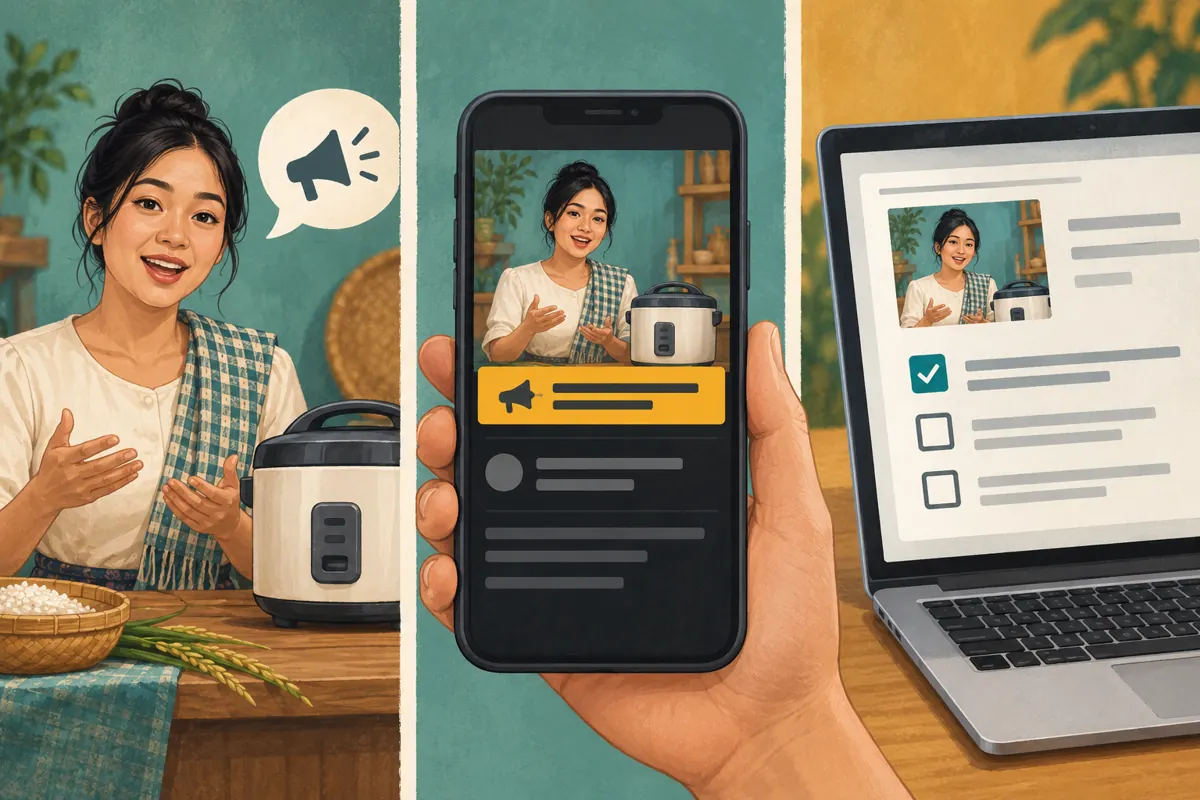
Prepare the viewer-facing explanation in the language used in the demonstration. For a Khmer-speaking audience, have a fluent reviewer check that the wording distinguishes payment, a gift, and a loan. This is an editorial recommendation for clarity, not a prescribed legal formula. Put the explanation before the sponsored recommendation begins, and support the spoken statement with a readable on-screen notice. A vague thank-you at the end leaves viewers to guess what happened. Keep the explanation short enough to understand without distracting from the demonstration.
4. Use YouTube’s disclosure control as a separate task
YouTube’s official guidance, Add branded content restrictions & disclosure labels, says creators must notify YouTube about branded content, sponsorships, endorsements, or other commercial relationships through the paid-promotion control in video details. Selecting that control adds a disclosure label at the beginning. The creator responsible for the upload should complete this platform step alongside the explanation in the video.
Open the intended video’s details in YouTube Studio and locate the paid-promotion or branded-content setting. Read the wording shown in the current interface, select the applicable disclosure, and save the change. Record who completed the check and which upload they reviewed. Do not assume that a sentence in the description automatically changes a Studio setting. The official guidance also places responsibility for applicable requirements on creators and their partners; the platform label should not be treated as a complete determination of every disclosure obligation.
5. Check the finished video in three practical passes
First, listen without watching. Can a viewer understand the commercial relationship from the spoken explanation? Second, watch on a phone with the sound muted. Is the on-screen disclosure readable, and does it remain visible long enough to understand? Third, inspect the description and saved video settings. These are complementary editorial checks: a strong result in one pass does not repair an omission in another.
Review the actual exported file, because editing can accidentally remove an introduction or crop a notice. In the hypothetical rice cooker video, an editor shortens the opening to reach the cleaning demonstration sooner. The reviewer should check that this change has not removed the sponsorship explanation. Also examine the product claims around the disclosure. A clearly labelled advertisement can still make an unsupported claim. Ask whether each statement comes from the demonstrated experience, confirmed product information, or an assumption that should be removed.
6. Decide what an SMM service can—and cannot—address
The supplied public catalogue includes “YouTube - Like ~ Max 1M ~ 𝐍𝐎 𝗥𝗘𝗙𝗜𝗟𝗟 ~ 50k/days ~ INSTANT”. Its name identifies a YouTube-like service, but its description is empty. The wording does not establish how engagement is obtained, whether participants are Cambodian, or whether anybody intends to buy an appliance. Treat delivery language in the title as catalogue wording, not independently verified performance.
YouTube’s Fake engagement policy prohibits artificial increases in views, likes, comments, and other metrics. It also warns that a hired promoter’s actions can affect the channel. For this collaboration, do not order artificial likes to make the sponsored demonstration appear more convincing. A sponsorship disclosure does not make artificial engagement acceptable. Purchased engagement is not evidence of genuine interest, sales, advertising delivery, or Cambodian users. If the shop wants better customer understanding, spend the next effort on a clearer demonstration, useful distribution, and answering real questions.
7. Promote the demonstration with its context intact
Prepare a short sharing message that tells readers what the video explains and identifies the collaboration. For the hypothetical shop, the message might introduce a sponsored demonstration of removing and cleaning the rice cooker’s inner pot. Share it through the business’s established customer-facing channels where that information is useful. Avoid presenting the creator as an ordinary customer who independently discovered the shop.
If the creator supplies a shorter excerpt, review it as its own piece of communication. Someone watching only that excerpt should still understand the relationship. Do not assume they will open the full video to discover the disclosure. Check permission for each planned reuse, including whether the shop may edit the footage or use it in advertising. Keep the initial agreement specific about those uses. A paid filming arrangement does not, by itself, tell the team what reuse rights were agreed.
8. Prepare answers for questions the video is likely to create
Before sharing, assign someone to answer product questions during the shop’s stated response hours. Prepare factual notes about the demonstrated model, included accessories, collection location, and how customers can ask about availability. Keep temporary sales information separate from evergreen care instructions so staff can update the former without confusing the latter.
In the hypothetical example, a viewer asks whether the inner pot from an older cooker fits the model shown. Staff should request the relevant model information through the appropriate contact route and verify compatibility before answering. The creator’s demonstration is not proof that different parts are interchangeable. If someone asks whether the creator was paid, answer consistently with the disclosed arrangement. Do not bury that question beneath promotional replies. A calm, direct answer gives the viewer useful context without turning the comments into an argument about whether sponsorship makes every observation invalid.
9. Evaluate useful outcomes without overstating attribution
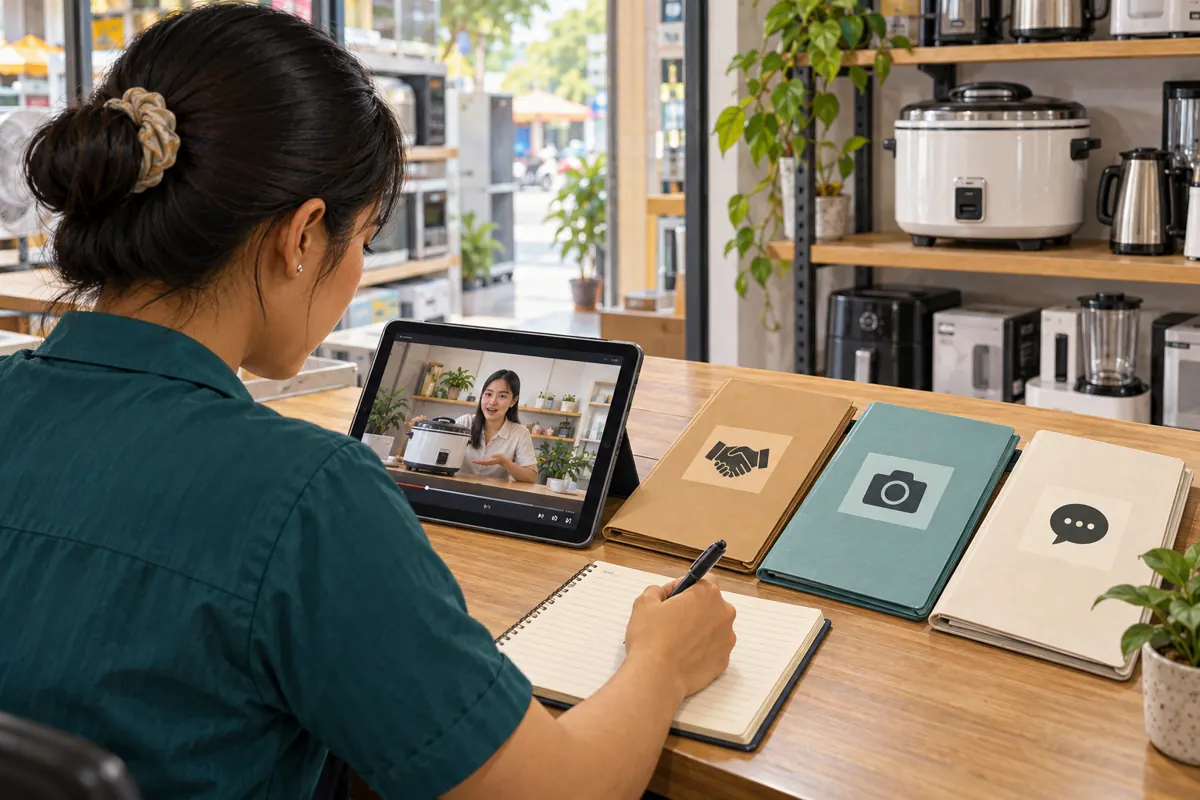
Keep three records: the creator arrangement, the approved content, and subsequent business enquiries. The first explains what was commissioned. The second shows what was delivered and reviewed. The third helps staff understand what customers still need to know. Payment for a video proves that a production expense occurred; it does not prove that the video generated sales.
For the hypothetical shop, note whether enquiries mention the demonstrated model, ask about cleaning, or reveal a missing explanation. If customers voluntarily identify the video as their starting point, record that as reported information. Do not attribute every enquiry during the same week to the collaboration. When the next content decision arrives, use the unanswered questions to refine the demonstration brief. A recurring request to see how the lid is cleaned suggests a specific follow-up topic; a larger like count alone cannot explain that need.
10. Fix omissions before expanding distribution
Common mistakes include treating a free appliance as irrelevant because no cash was paid, using an unclear collaboration label, checking the wrong upload, and approving the script without reviewing the exported video. Another mistake is assuming that a disclosure proves every product statement is accurate. Keep relationship disclosure and factual review as distinct responsibilities in the same approval process.
If the published version lacks necessary context, pause additional sharing while the creator checks the relevant settings and prepares an appropriate correction. Agree on the corrected wording and review the revised viewer experience before resuming promotion. Do not try to compensate for a disclosure problem by buying positive reactions or asking staff to pose as satisfied customers. Record what changed so everyone shares the corrected material. For the next collaboration, move the missed check earlier in the workflow and name the person responsible for completing it.
Frequently asked questions
Does a free rice cooker matter if the creator receives no cash?
Yes. YouTube’s branded-content guidance includes videos made in exchange for free products or services. Record whether the item is a gift or a loan and describe the arrangement accurately. The absence of a cash fee does not, by itself, establish that the video has no commercial relationship.
Is saying “thanks to the shop” a clear enough explanation?
That wording leaves the benefit unclear. As an editorial practice, say whether the shop paid, supplied a product to keep, or provided a loan for the demonstration. Have a fluent speaker review the audience-language version so the distinction survives translation. Match every statement to the actual arrangement.
Can the shop use panel likes after the creator enables the disclosure?
The disclosure and engagement method are separate issues. YouTube prohibits artificial engagement, and enabling a sponsorship label does not override that policy. A catalogue listing also provides no proof of customer intent or local demand. Use genuine questions and verified business enquiries to assess what the demonstration helped people understand.
What should happen if the creator’s opinion disappoints the shop?
Distinguish an unfavorable observation from a factual mistake. Request correction of an incorrect model number or demonstrably wrong statement, with supporting information. Discuss opinions against the agreed editorial boundaries rather than rewriting them as independent praise. Clear expectations before filming reduce pressure to conceal limitations afterward.
How should a small shop judge whether to commission another demonstration?
Review whether the creator delivered the agreed explanation, represented the relationship clearly, and helped answer a useful shopper question. Examine the substance of subsequent enquiries and the effort needed to handle them. Commission another video when there is a specific unanswered topic and a workable production plan, without treating engagement totals as guaranteed sales.
Explore the current service catalogue, create an account, or ask a specific question through support tickets.
- YouTube Help: Add branded content restrictions & disclosure labels
- YouTube Help: Watching videos with branded content, sponsorships & endorsements
- YouTube Help: Fake engagement policy
Prepared with AI assistance. Illustrations explain the workflow and do not represent customer results.