20/10/2026 05:08
Where Should Viewers Ask About Fabric? YouTube Profile Links for Cambodian Upholstery Shops
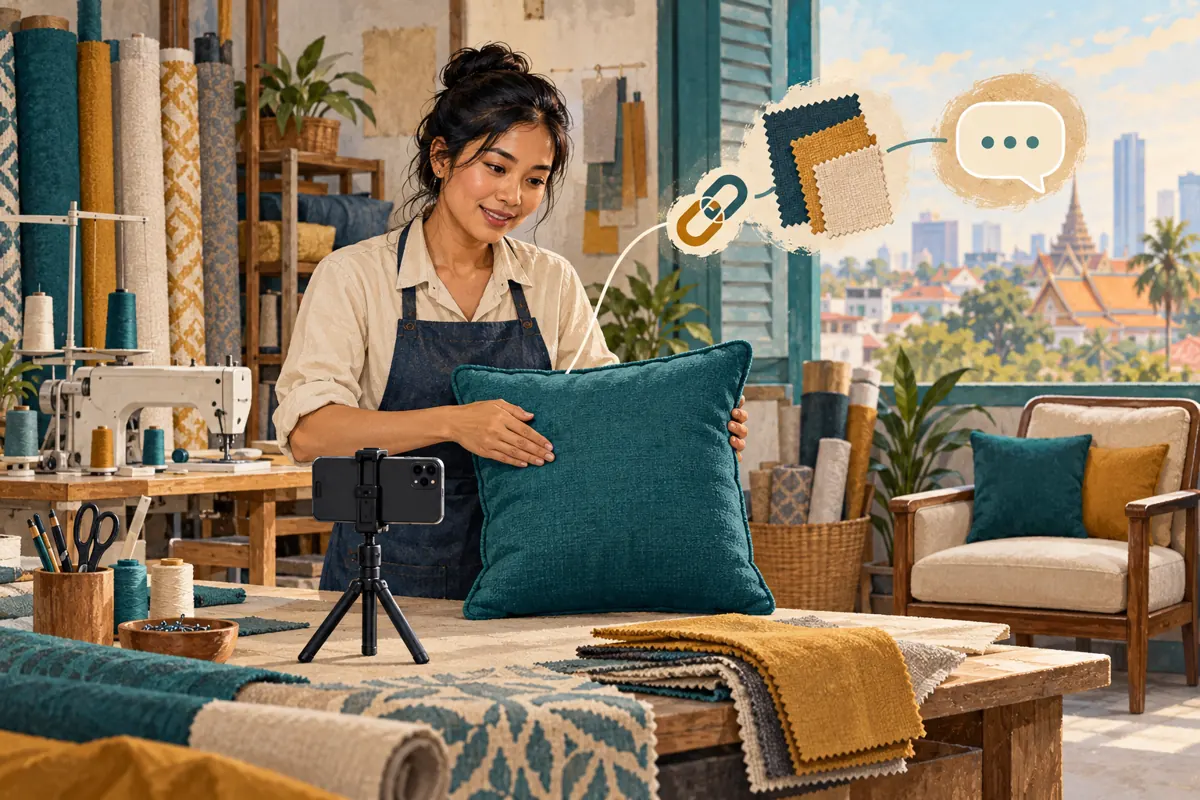
A cushion demonstration can explain stitching beautifully while leaving a potential customer unsure where to ask about fabric. For a Cambodian upholstery workshop, the missing step may be a clear route from the YouTube channel to an enquiry destination. Before spending on promotion or considering an SMM panel service, make that route useful. This workflow covers choosing the first profile link, preparing its destination, testing it on a phone and assessing enquiries without confusing engagement counts with demand. The workshop examples below are hypothetical illustrations, not customer stories or promised results.
1. Define the question the link should help answer
Start with a customer task narrow enough to complete. An upholstery workshop might want viewers to ask whether a demonstrated fabric is available for replacement dining-chair cushions. That is more concrete than wanting people to visit the website. Write the intended task in the team’s working notes: identify the sample, explain the furniture involved and request the next step. This gives both the video editor and the person answering messages the same objective.
In a hypothetical Phnom Penh workshop, the owner demonstrates a removable cushion cover. Viewers need to distinguish buying a finished cover from requesting custom upholstery. The destination should explain those options before asking for contact details. Otherwise, staff may receive messages that require a fresh explanation of the entire service. Decide what information makes a conversation useful, then design the link around that information.
2. Give the first profile link one clear job
YouTube allows up to 14 channel profile links. Its profile guidance says the first appears prominently near the subscribe button, while viewers reveal the remaining links through an additional action. An authorized editor can add a link in YouTube Studio under Customization, then Profile, entering its title and URL before publishing. These instructions concern the channel profile, so check that you are editing the intended channel. Source: YouTube Help, Manage your YouTube channel’s profile.
Use that first position for the most useful next step across the channel’s current demonstrations. For the hypothetical workshop, a title such as “Fabric options and enquiries” describes the destination more accurately than “Discover more.” Additional links might serve directions or care instructions, but each should earn its place. A long menu makes the visitor decide which route the workshop intended. Keep the initial choice easy without concealing necessary information.
3. Choose between a direct page and a small directory
Use a direct destination when most videos lead to the same customer task. A fabric enquiry page can combine current sample photographs, service boundaries and a contact action. A small directory becomes useful when the channel genuinely serves different needs, such as cushion replacement, sofa repairs and fabric care. In that case, organize choices around those needs rather than internal department names. Avoid adding a directory solely because another business uses one.
Consider older videos before changing the first link. A viewer may arrive from a demonstration of an earlier collection. A stable fabric-enquiry destination can explain that samples change and ask the viewer to identify the video or material. A temporary campaign page may leave that person stranded after the promotion ends. Keep a simple record of the destination owner and its purpose so future changes preserve a useful route for earlier viewers.
4. Prepare the destination for Cambodian enquiries
Show the workshop’s actual service area and distinguish collection, delivery and on-site work where applicable. A person asking from Battambang may need different arrangements from someone near a Phnom Penh workshop. Do not imply nationwide service unless the business can provide it. Explain whether customers should begin with a furniture photograph, approximate measurements or a visit. State when an estimate still requires inspection rather than presenting an enquiry as a confirmed booking.
Use the language customers can comfortably act on. If the demonstration is in Khmer, a Khmer enquiry route should remain understandable through the contact step; an English option can support other customers where useful. Keep sample identifiers consistent across languages. Ask only for information needed at this stage. A furniture photograph and general location may be enough to start, while an exact home address can wait until the workshop actually needs it.
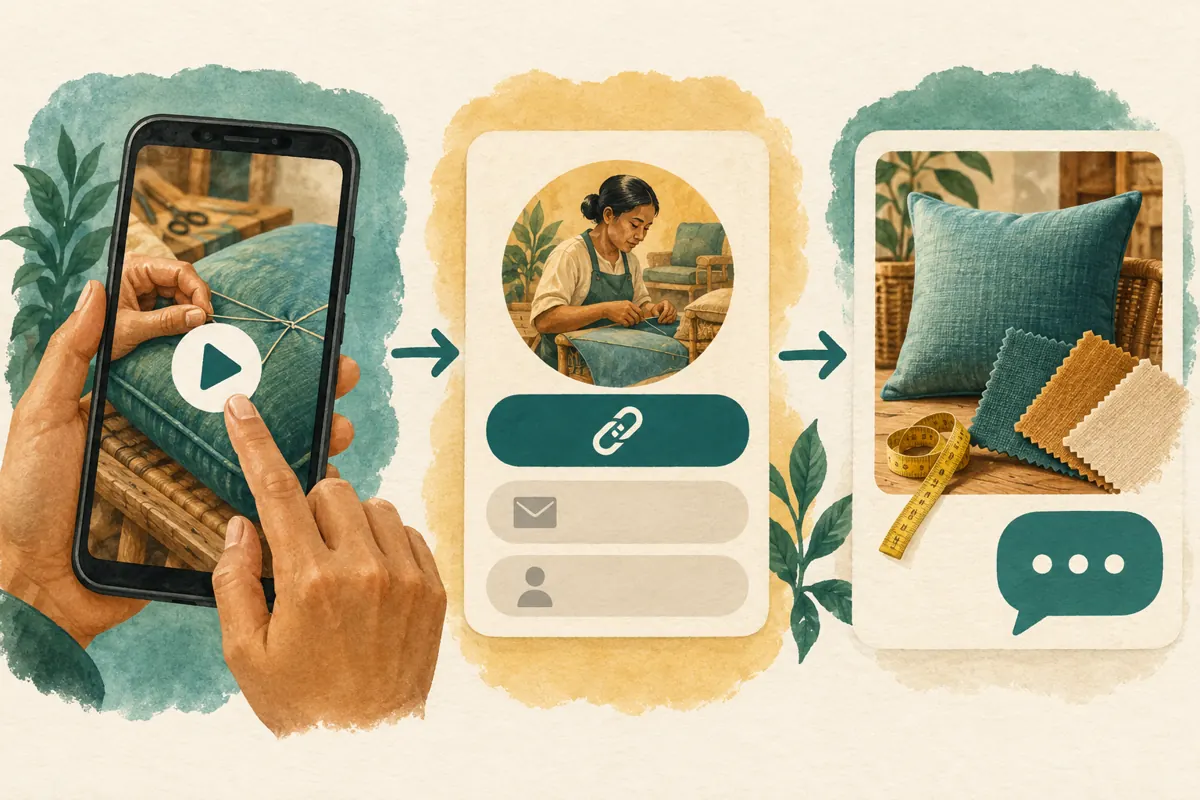
5. Make the video’s invitation match the clickable route
A viewer should hear a specific instruction that remains accurate when followed. In the hypothetical cushion demonstration, the presenter could direct viewers to the channel profile’s fabric-enquiry link and ask them to identify the sample shown. Avoid promising a price list if the destination only offers quotations. Describe what visitors will find and what they should prepare, rather than ending with a vague request to check the profile.
YouTube’s sharing-links guidance distinguishes clickable channel profile links from URLs in Shorts descriptions and comments, which are non-clickable. It also says clickable external links in long-form descriptions and comments require access to advanced features. Therefore, do not assume that pasting the same address into every format creates the same journey. Test the route used by the actual video format. Source: YouTube Help, Sharing links with your audiences.
6. Test the complete journey on a phone
Ask a colleague unfamiliar with the setup to begin at the public video, find the channel link and reach the intended enquiry action. Give them the customer task without coaching each tap. Observe where they hesitate. Can they identify the workshop? Does the destination show the fabric before a large decorative banner? Can they tell whether they are requesting information or placing an order? Record the obstacle itself instead of describing the page as simply good or bad.
Test with a normal visitor session as well as the editor’s familiar device. An owner’s saved login or installed messaging app can hide problems another visitor encounters. Where practical, check both browser and app routes, readable text, loading behaviour and a fallback contact method. Send a clearly marked internal test enquiry and verify who receives it. A working button is insufficient if the message reaches an unattended inbox or loses the sample reference.
7. Review an SMM listing without turning its title into evidence
The supplied tubekh.com catalogue includes “YouTube - Views ~ 𝐋𝐢𝐟𝐞𝐓𝐢𝐦𝐞 ~ 1k-2k/days ~ [ 𝐒𝐨𝐮𝐫𝐜𝐞: Mixed ]”. Its title presents it as a views service, but the supplied description is empty. That leaves no supporting explanation of delivery methods, audience location or what the title’s other claims mean. Record it as a catalogue listing under review; do not repeat its wording as a verified promise or infer that it supplies Cambodian prospective customers.
YouTube prohibits artificial increases in engagement and warns that a hired promoter’s actions can affect the channel. Review the proposed method against that policy before making any commitment; reject methods that artificially inflate metrics. An unclear delivery method is a reason to stop the purchase decision and request clarification. Purchased engagement does not establish genuine interest, sales, ad delivery or Cambodian users. Source: YouTube Help, Fake engagement policy.
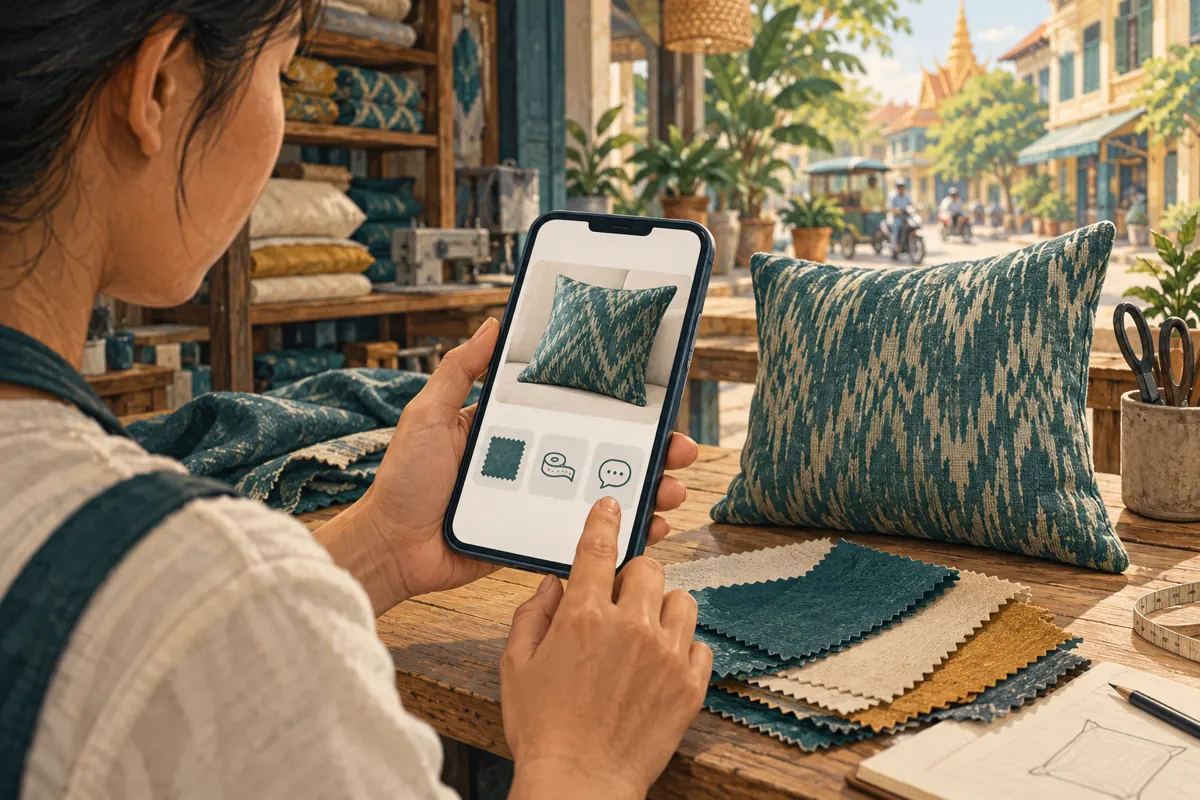
8. Keep visitor activity, service records and enquiries separate
Maintain distinct records for what happened on the content, what a supplier reported and what customers actually asked. A service completion status describes the supplier’s record. A page visit describes an interaction with the destination. A fabric enquiry describes a conversation, and a confirmed job requires its own business confirmation. These categories answer different questions. Combining them into a single success total hides the point where the customer journey may need improvement.
For a hypothetical review, staff might notice that enquiries identify the cushion but omit its dimensions. That observation supports improving the measurement prompt; it does not prove a promotion generated profitable work. If appropriate, ask enquirers how they found the workshop, allowing them to say they do not remember. Note concurrent activity such as another social post or an in-store referral. Even a reported YouTube referral does not establish which promotion influenced the person.
9. Correct common mistakes at the right stage
One common mistake is changing the first link for every new upload. Earlier videos then send viewers to a destination with a different purpose. Prefer a stable page that can present changing collections clearly. Another mistake is using an attractive label that conceals the action: a button implying immediate booking should not lead to an unstructured request form. Name the actual next step and explain what happens after submission.
A further mistake is treating repeated basic questions as proof that more promotion is needed. If viewers cannot identify a sample or understand the service area, repair that information first. Likewise, do not use view counts as reassurance that the enquiry route works. Test the route directly. When a supplier’s description is missing, seek evidence rather than filling the gap with assumptions about quality, retention, real users or local targeting.
10. Assign maintenance before widening promotion
Give one person responsibility for checking the profile destination when collections, contact details or service arrangements change. Give another clear responsibility for answering incoming enquiries, even if one employee performs both roles. The handoff should include the active link label, destination, sample references and any limitations staff must explain. Keep account access separate from these editorial notes; a reviewer can inspect public destinations without receiving login credentials.
Use a simple decision process before sharing the demonstration more widely. If the destination is inaccurate, correct it. If it works but staff cannot respond, resolve that capacity issue. If the customer route is ready but a proposed promotion method remains unclear, hold that spending decision. When both the route and promotion method are acceptable, retain the review notes and monitor actual questions. Let those questions guide the next improvement to the demonstration or enquiry page.

Frequently asked questions
Should a Cambodian workshop use every available profile-link slot?
Only add destinations that help visitors complete a distinct task. A workshop may need a fabric enquiry route and practical visit information, while another business needs separate service categories. Start with the most common customer need. Review whether each additional destination answers something useful rather than treating the available capacity as a target.
Can the first profile link lead directly to a messaging destination?
A messaging destination may suit a workshop that already handles enquiries there, provided the link meets YouTube’s rules and works for visitors. Test what happens without the relevant app installed. Give customers enough context beforehand to identify the fabric and furniture involved, and provide a usable alternative if the messaging route cannot open.
What if the featured fabric is no longer available?
Update the enquiry destination to explain the situation and show alternatives only when they are actually available. Keep the original sample identifiable so staff understand questions from older videos. Do not silently relabel a different fabric as the demonstrated one. Explain differences that could affect a customer’s decision before offering a quotation.
Does a rise in views show that the profile link is working?
No. Viewing and following the enquiry route are different actions. Test the route directly and review relevant destination activity where reliable records exist. Examine whether enquiries contain the information staff need. Even improved enquiry volume needs context, because other posts, referrals or seasonal demand may have contributed.
What should happen when an SMM listing supplies no delivery explanation?
Pause the purchase decision and ask for a clear account of the method and scope. A title alone cannot establish policy compliance, audience origin or genuine interest. If the method would artificially inflate engagement, reject it. Keep improving the demonstration and customer route independently of whether any paid service is selected.
Explore the current service catalogue, create an account, or ask a specific question through support tickets.
- YouTube Help: Manage your YouTube channel’s profile
- YouTube Help: Sharing links with your audiences
- YouTube Help: Fake engagement policy
Prepared with AI assistance. Illustrations explain the workflow and do not represent customer results.