22/10/2026 02:52
Music Behind the Buckle Demo? YouTube Audio Library Checks for Cambodian Belt Shops
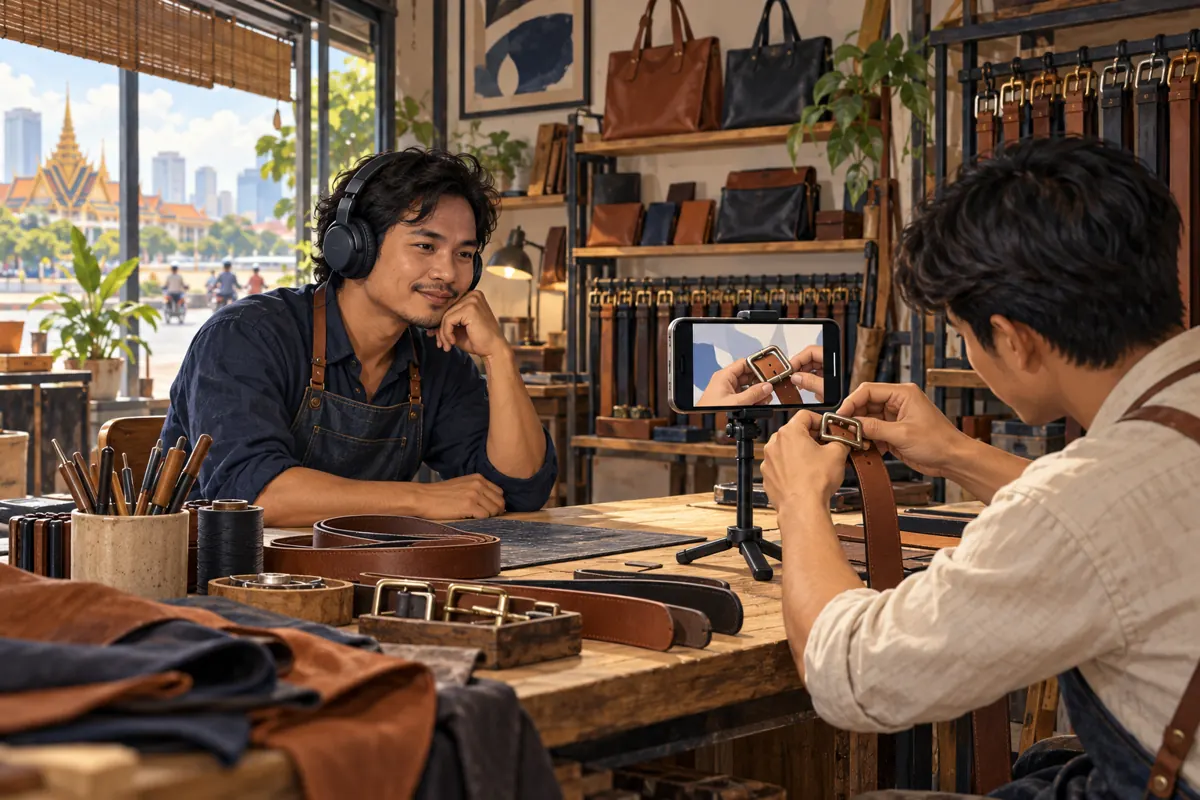
Background music can make a leather-belt demonstration feel finished, but it can also distract from the detail a buyer needs. A Cambodian shop explaining buckle fastening or belt sizing needs viewers to understand the product before they notice the soundtrack. This guide follows a hypothetical Phnom Penh belt shop preparing a YouTube demonstration for promotion. It explains how to choose music, preserve useful workshop sound, record attribution and review a proposed SMM service without confusing a catalogue label with evidence. The practical goal is a video that answers a customer’s question clearly and has a traceable music choice.
1. Give the soundtrack one specific job
Start by writing the customer question at the top of the editing brief. For the hypothetical shop, it is: how does this buckle fasten, and where should the customer measure an existing belt? That question defines which sounds matter. The explanation of the measurement points deserves attention; a decorative opening shot can accommodate more music. Choosing a song before deciding this often forces the demonstration to follow the soundtrack’s pace.
Give music a limited purpose, such as supporting a short opening or connecting two silent close-ups. Avoid a vague instruction to make the whole video exciting. Ask the editor to prepare a version with narration and natural sound first. If that version feels confusing, repair the sequence or explanation. A soundtrack cannot supply a missing view of the buckle or clarify which end of the belt the presenter means.
2. Start with a source you can identify
YouTube’s official Audio Library guidance directs creators to Audio Library in YouTube Studio. Its music tools support searching and filtering, including by mood, duration and attribution. Preview possible tracks there, then download the selected audio. Use the official library rather than treating a video titled copyright-free as equivalent. YouTube distinguishes its own library from music offered by other channels or libraries.
For this shop, shortlist a few restrained instrumental options and listen to each beneath the same spoken passage. Keep the comparison small enough to finish during one editing session. Record the selected track’s title, artist, source and download date in the project notes. Give the downloaded file an identifiable place in the project folder. A file called final-music offers little help when another editor later needs to establish what was used.
3. Decide how attribution will travel with the video
Some Audio Library tracks require attribution. YouTube instructs creators using its Creative Commons tracks to copy the supplied attribution into the video description. The library also offers an Attribution not required filter. An automatic Music in this Video section does not replace required description credit. These instructions come from YouTube’s Audio Library help page, listed in the sources.
Treat the credit as part of the approved video package. Store the complete supplied wording beside the export instructions, then assign someone to check that it appears in the final description. Do not shorten names or remove links simply to make the description neater. If a colleague prepares the customer information while another edits the video, make the handover explicit: the person assembling the description must receive the music credit along with the product details.
4. Protect the sounds that explain the product
Review the original recording before adding music. Listen for useful sounds, such as the buckle tongue entering a hole, as well as distractions such as a radio playing behind the counter. If background music was accidentally captured during filming, plan a cleaner recording or a replacement narration track. Layering another song over the recording does not establish permission for the first song or make the instruction easier to hear.
In the hypothetical demonstration, let the fastening action remain audible, then reduce or remove the music while the presenter explains measurement points. Keep the voice comfortable and consistent between shots. There is no single volume-slider position that suits every recording: a dense musical passage can compete with speech even when its slider looks low. Judge the finished combination by listening, especially where the speaker names a condition, a unit or an exception.
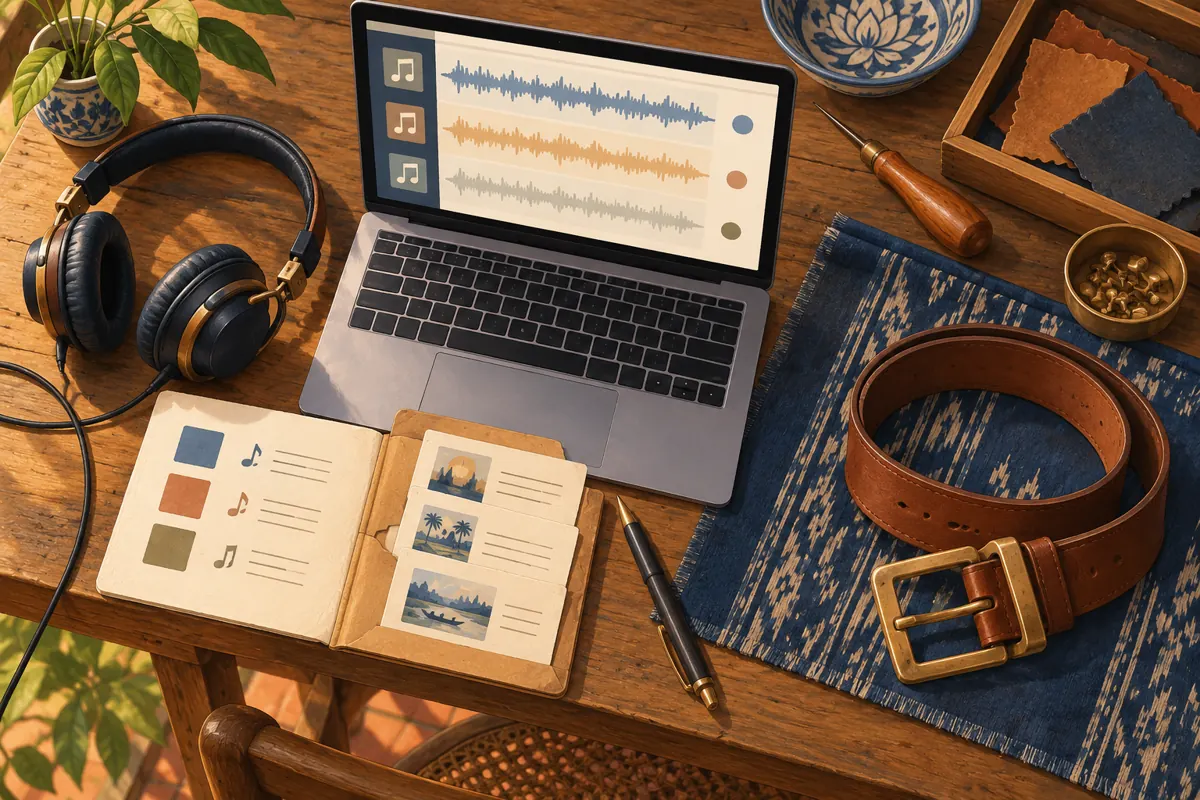
5. Build a simple music map around the edit
Divide the demonstration into an opening, the working explanation and the closing instruction. Write a short music note for each part. The opening might use a brief instrumental introduction; the explanation might use very little music; the closing might allow a gentle return after the final spoken sentence. This gives the editor a repeatable decision process without requiring a complicated audio production plan.
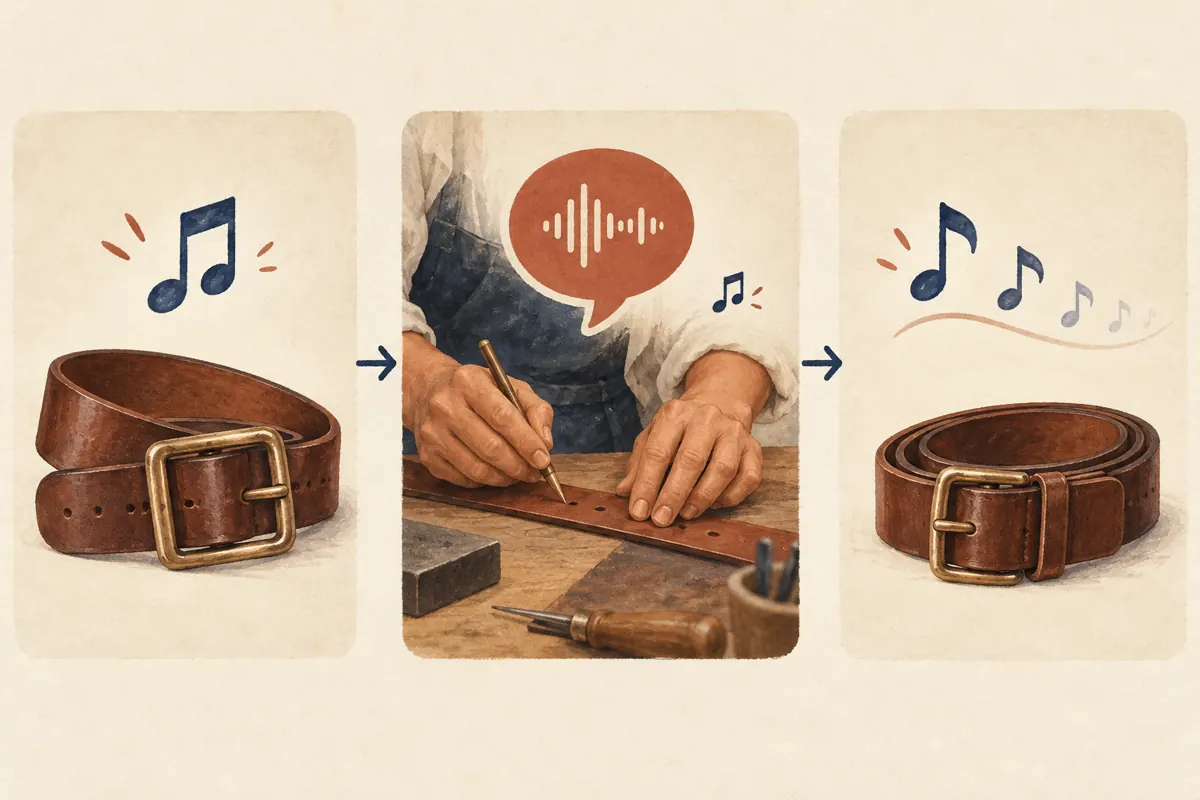
Keep visual actions complete even when the music changes. Do not cut away from the fastening step just because a musical phrase ends. Likewise, avoid inserting an artificial click to suggest that a buckle locks if the real product does not make that sound. The illustration accompanying this section shows the intended emphasis: music introduces the product, speech leads the practical explanation, and the soundtrack fades at the finish. It represents an editing approach, not measured performance.
6. Test understanding on ordinary listening equipment
Export a review copy and play it through both headphones and a phone speaker at a comfortable volume. Ask a Khmer-speaking colleague who did not edit the video to explain the measurement instruction back to you. For an English-language demonstration, use a reviewer comfortable with that language. The test is whether the instruction survives normal listening, rather than whether the reviewer likes the song.
Use concrete review questions: which point starts the measurement, is the buckle included, and what information should a customer send? If the reviewer misses an answer, replay that passage without music. This helps distinguish an audio problem from an unclear script. Record the passage and the needed change rather than writing that the sound needs improvement. Repeat only the affected check after revision, then listen once through the complete export for awkward transitions.
7. Keep the music decision attached to the correct export
A shop may create a long demonstration and a shorter promotional excerpt from the same footage. Give each export a clear identity and record which soundtrack it contains. If the editor changes the track after the description draft is approved, reopen the credit check. Otherwise, the final upload may identify music that is no longer present while omitting the track viewers actually hear.
Keep an editable version with separate voice, workshop sound and music wherever your editing process allows. That makes a later soundtrack change more manageable. For any proposed repost to another platform, review the relevant music terms before exporting again; do not assume that a successful YouTube upload establishes every other permitted use. Save the decision with that particular version so a future staff member does not have to reconstruct it from memory.
8. Evaluate an SMM listing separately from the music
The supplied catalogue includes the exact public service name “Youtube ~ Adwords Views ~ Min 1M ~ Super Fast ~ 𝐋𝐢𝐟𝐞𝐓𝐢𝐦𝐞 ~ INSTANT”. Its category presents it as a views offering, but the supplied description is empty. The name does not establish the delivery method, official affiliation, Cambodian audience targeting or actual advertising activity. Treat its quantity and speed wording as catalogue claims requiring clarification, not confirmed specifications.
YouTube’s fake engagement policy prohibits artificially increasing engagement metrics and says a hired promoter’s actions can affect a channel. Before considering a service, request a clear explanation of how viewers encounter the video and assess that method against the policy. Decline artificial engagement. Purchased engagement is not evidence of genuine interest, sales, ad delivery or Cambodian users. A correctly credited soundtrack does not resolve those separate promotion questions, and an unexplained service should not receive approval simply because the video is ready.
9. Avoid shortcuts that create another editing problem
One common mistake is using a familiar song because it feels appropriate for the audience without establishing permission. Another is assuming that music supplied by an editor must already be cleared. Ask for the source and applicable terms before approving the soundtrack. A third mistake is deleting the attribution while shortening the description. Keep the credit check visible during every revision involving music or description text.
Editorial shortcuts can be just as damaging. Music that starts loudly may cover the opening product name. A dramatic sound effect may exaggerate the buckle’s operation. A continuous rhythm may encourage cuts that omit a necessary hand movement. Assign one reviewer to watch for product accuracy and another, if available, to listen for clarity. In a small shop, one person can perform these as separate passes rather than trying to judge everything at once.
10. Approve a useful demonstration and learn from real questions
Finish with a concise handover containing the approved export, its track record, required credit, description draft and any unresolved promotion question. If the music choice remains uncertain, use the clean narration version while resolving it. If the measurement explanation remains unclear, revise that passage before increasing distribution. These are practical release decisions that protect the usefulness of the demonstration.
After sharing through appropriate channels, collect genuine questions about the belt. Note whether people still ask where to measure or whether the buckle is included. Those questions can reveal a missing explanation, though they do not by themselves prove that music caused the misunderstanding. Keep any service-delivery records separate from customer enquiries and orders. Review the video according to whether it helps people understand the product, with business conclusions supported by actual business records.
Frequently asked questions
Should a Cambodian product demonstration always have music?
No. Clear narration and useful product sound may be sufficient. Use music when it supports a defined part of the demonstration, such as a silent opening. If removing it makes the measurement explanation easier to follow, keep that passage free of music.
Can we put a short thank-you to the artist instead of the supplied credit?
For an Audio Library track requiring attribution, follow YouTube’s instruction to use the supplied attribution information in the description. A general thank-you may omit essential details. Keep the original credit in the project notes so it remains available when descriptions are revised.
What if the editor cannot identify the music file?
Pause approval of that soundtrack and request its source and terms. If they cannot be established, replace it with an identifiable option or use the clean narration version. Keep voice and music separate during editing so replacement does not require rebuilding the entire demonstration.
Does a service name containing Adwords prove that it runs official ads?
No. The supplied listing has no descriptive evidence establishing its method or affiliation. Request specific information and assess the proposed method independently. Do not treat a catalogue label, delivery status or increased counter as proof that an advertising campaign ran or reached Cambodian buyers.
How can we judge the soundtrack without claiming it increased sales?
Use a comprehension review: can an unfamiliar listener repeat the fastening or measurement instruction accurately? That supports an editorial decision about clarity. Sales attribution requires separate evidence, and a clearer soundtrack alone does not establish why someone enquired or purchased.
Explore the current service catalogue, create an account, or ask a specific question through support tickets.
- YouTube Help: Use music and sound effects from the Audio Library
- YouTube Help: Fake engagement policy
Prepared with AI assistance. Illustrations explain the workflow and do not represent customer results.